Speech-sound practice, organized
The practice happens at home. Now you can see it.
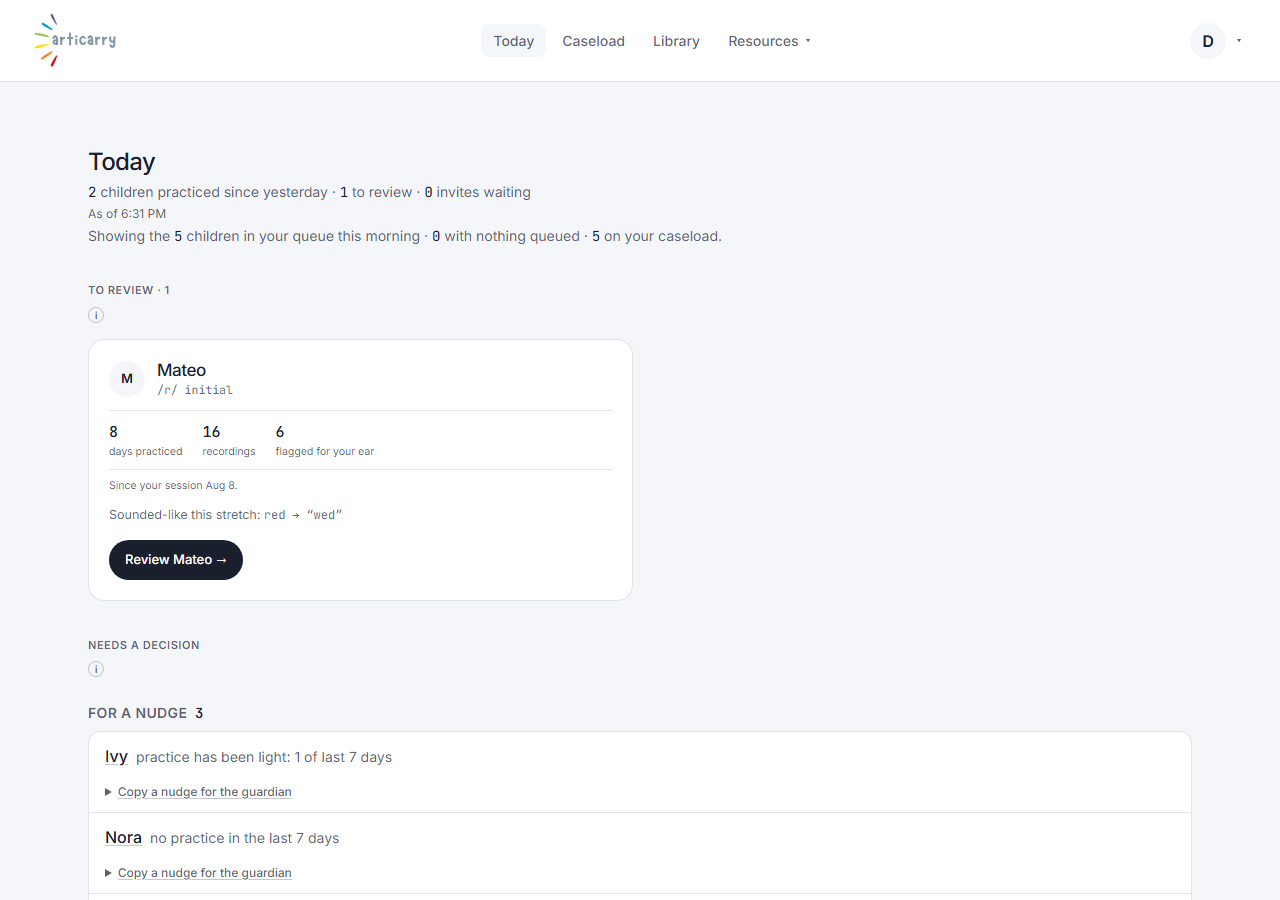
Articarry shows a speech-language pathologist what a child practiced between sessions, sorts the caseload by who needs attention, lays out the next planning move, and assembles the summary from her own records. It organizes practice. It never grades a child's speech.
Scope & limits: Articarry shows what a child practiced. It is not a test of a child's speech and makes no clinical claim.
Not ready yet? Leave your email and we'll tell you when it's ready.
Where would you like to start?
For speech-language pathologists
I'm a clinician
Walk the five things you do every week: the brief, the morning sort, the planning map, the summary, and the library. See how the no-clinical-claims design keeps the judgment yours.
For clinicians →
For parents & families
I'm a parent
See what your child does at home, what you can see, and an honest word about screen time.
For parents →
One loop, end to end
Articarry sits in the gap between appointments (the days a clinician never sees) and carries what happens there back into the next plan.
-
01
Assign a story
The clinician picks a book from the library; a “Fits” shelf shows which match the plan she set, and why.
-
02
Practice at home
The child reads the story they chose and records each word. Saying it builds a picture. Practice is the reward, never a score.
-
03
See, plan, record
The brief shows what changed and where to listen; the planning map holds the next move; the summary is assembled from her records.
Want to know when it's ready?
Articarry is in a small private beta. Leave your email and we'll tell you the moment families can join.
What Articarry will not do
Most software in this space is tempted to grade a child's speech and hand a clinician a verdict. Articarry is built the other way. It gives a clinician visibility into what was practiced, not a verdict on how it went. It records what was practiced and points attention; it never tells a clinician what a child's speech means. That line is enforced in the code, not just promised here.
-
It shows what happened
A practice record, sound by sound: what the child attempted, how many of the assigned days had practice, and the recordings themselves, for the clinician's own ear on demand. It is a record of what the child practiced, not a judgment of how each sound came out.
-
It points, it does not judge
Each word lands in one of three bands (clear, worth a listen, or flagged for your ear): a place to point an ear, never a grade on the child.
-
The clinician decides
Every interpretation stays with the clinician. Articarry is a record, not a second opinion.
Where Articarry is today
Articarry is in a private beta, built alongside practicing speech-language pathologists. We would rather earn a clinician's trust slowly than overstate what a young tool can do.
See the practice you have been missing
Start with how it works, or read the evidence the design rests on.