How it works
Assign a story. See the practice. Plan the next move.
A speech-language pathologist sees a child for an hour, maybe two, a week. The practice that carries a target sound forward happens in the days between: at the kitchen table, on a tablet, out of the clinician's sight. Here is the whole loop Articarry is built around, end to end.
Stage 01 · assign
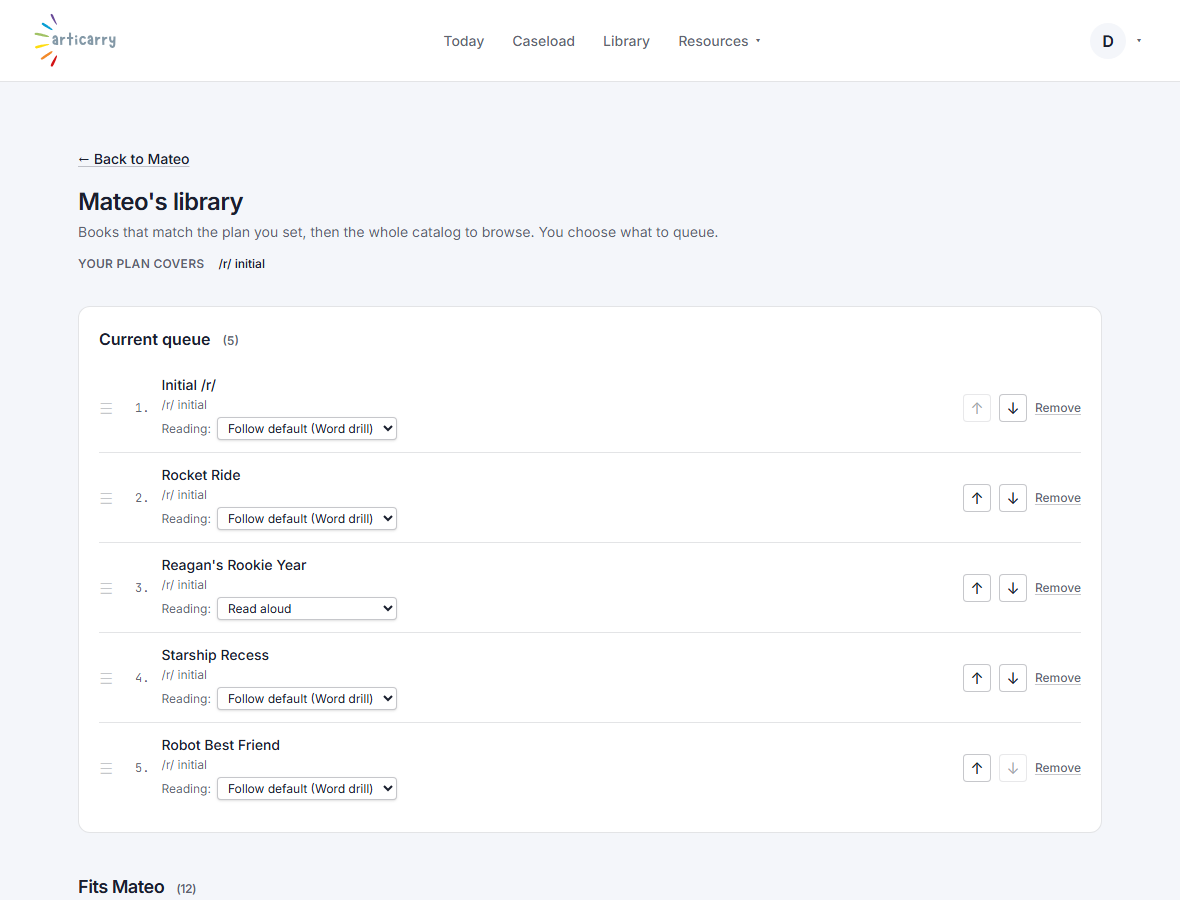
The clinician picks a book from the library
She starts at the fit-shelf library. A “Fits” shelf reads the plan she set and shows its reasons: which active cell each book covers, how it matches the reading level she assigned. She queues a story and adds a note: how many days a week, anything to watch for. Nothing reaches the child until a parent has read the scope of what Articarry does and given consent, a gate enforced on the server, not just in the browser.
Stage 02 · practice at home
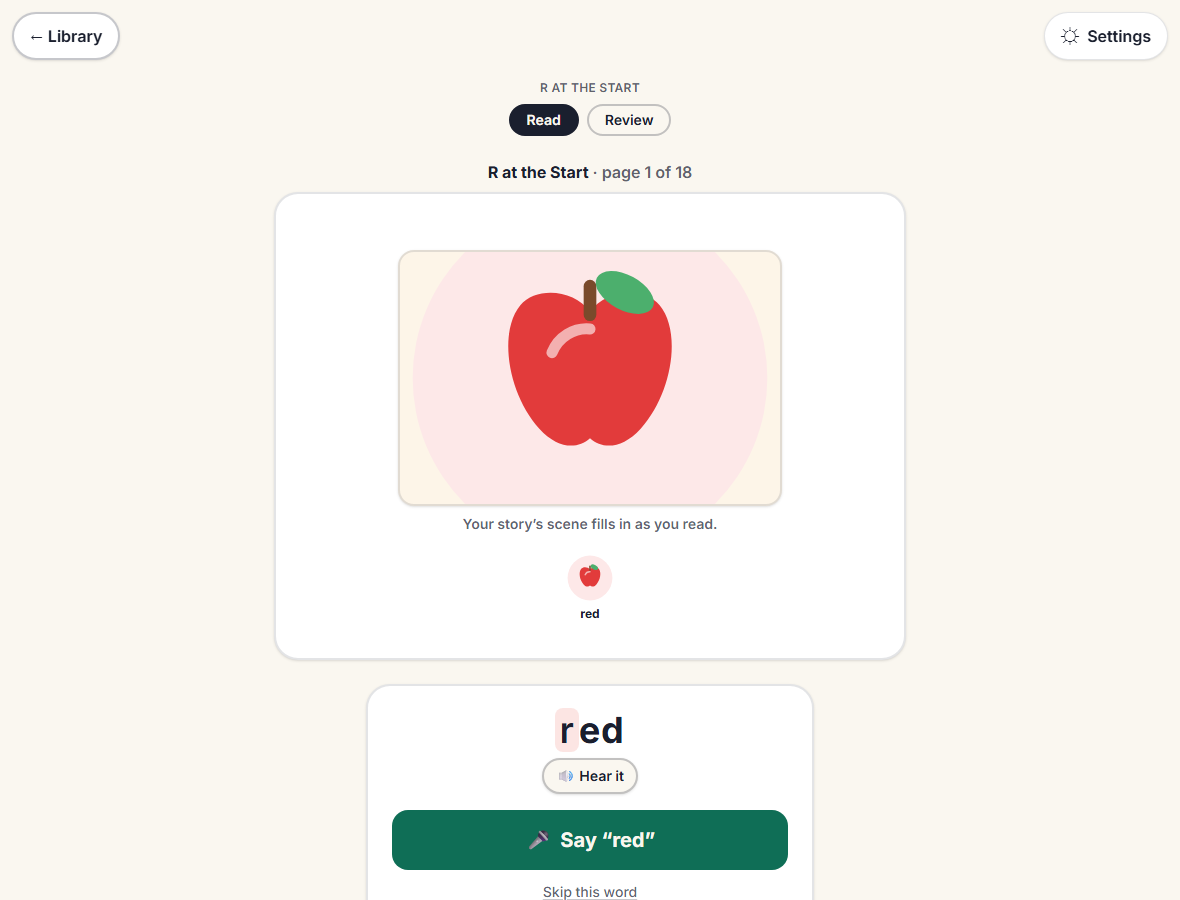
The child reads the story they chose
A parent opens the library and hands over the device. The child's shelf leads with the kinds of stories they said they like, so the book is one they chose. They read a short story page, then practice its couple of target words one at a time: each shown large with the sound gently marked, and a picture card to tap and hear. Saying a word builds its picture: the reward is for having practiced, never for how it sounded. There is no score on the child's screen, no green tick, no cross.
Stage 03 · see what happened
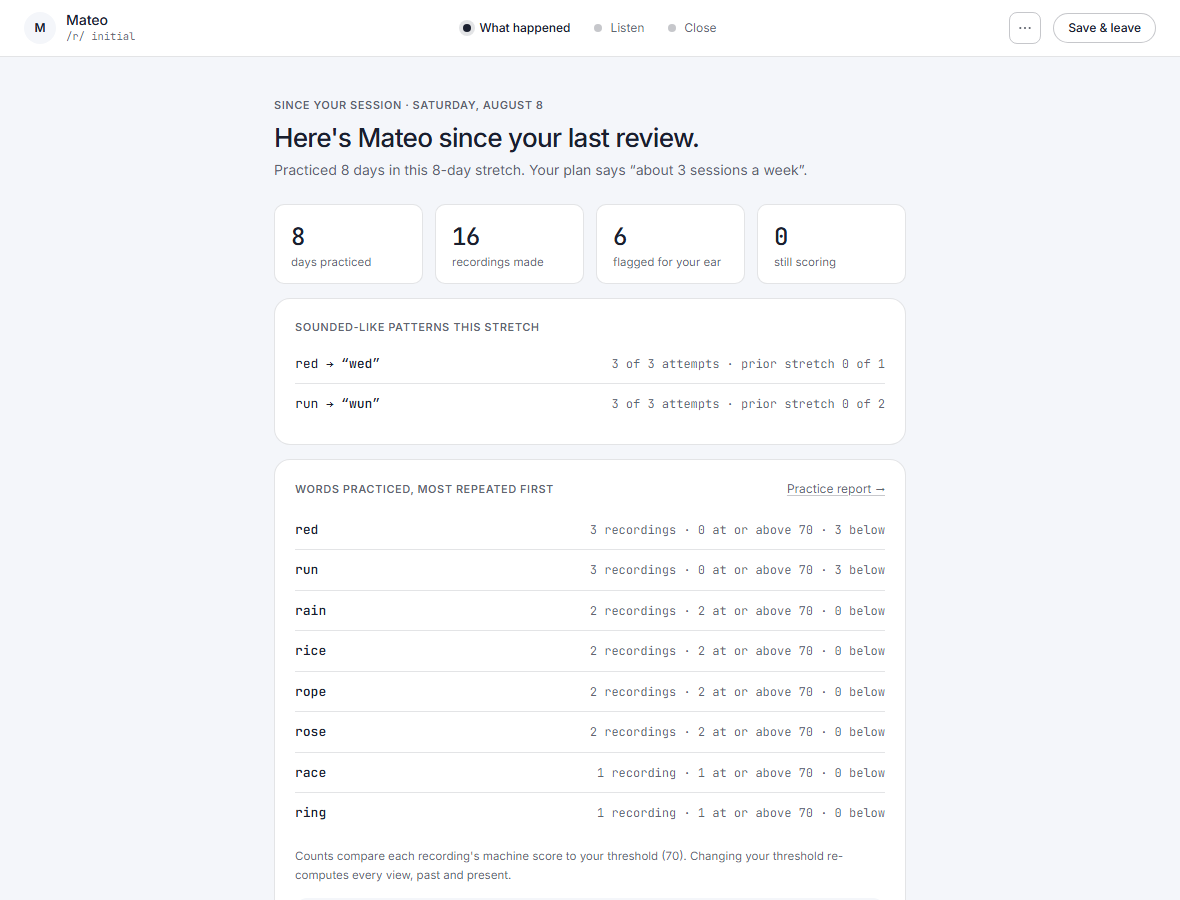
It surfaces in the session-prep brief
Back in the clinic, she opens the review and it leads with what changed since her last one: how many days they practiced, every recording they made, and the words worth her ear first, queued up to play. Every figure is a count of what was recorded. The clinician's own ear is the point; everything else only helps her decide where to listen.
Stage 04 · plan the next move
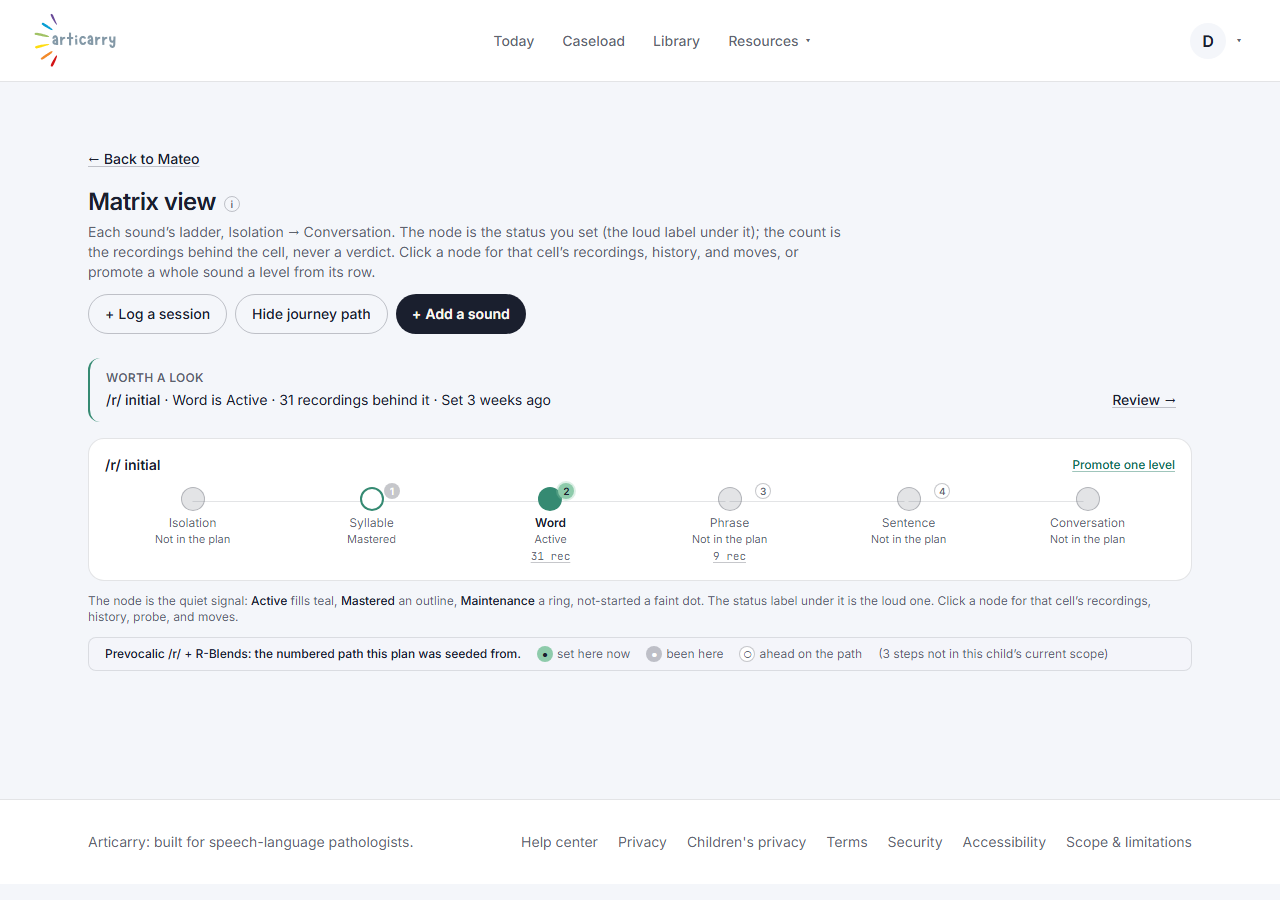
She re-plans on the planning map
When it is time to decide whether a sound moves up a level, the map lays out every fact she would want: what she set, what the recordings show, where the plan she chose meant to go next, and whether the library has books to support the move. The decision stays hers; the move is one click from the cell. The record underneath all of it is articulation carryover tracking.
Stage 05 · assembled from her records
She logs the session, and the progress letter assembles from her records
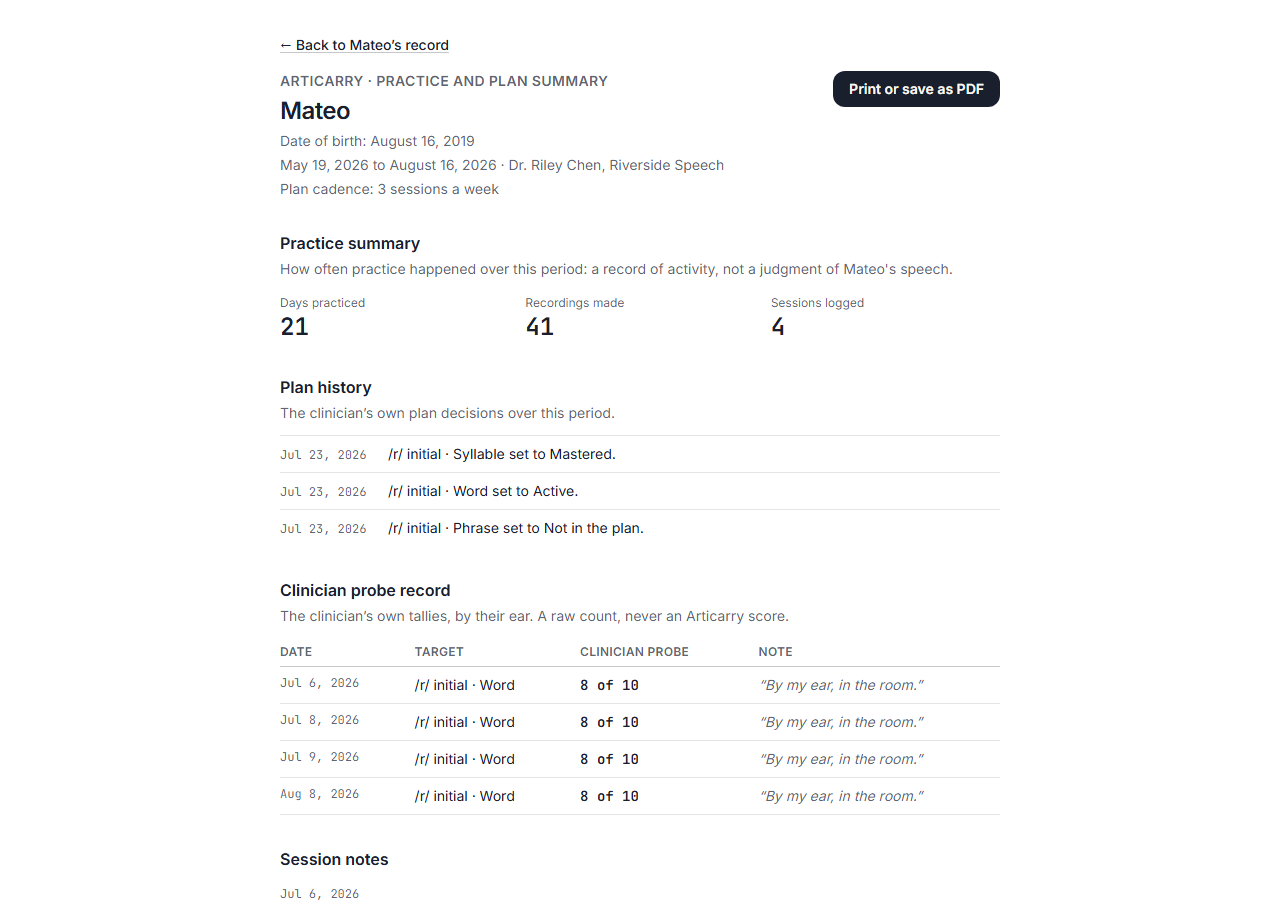
After the session she records that it happened and her own tally for a cell or two: a raw count, by her ear. When a parent or an insurer needs a summary, it is already assembled from her records: the practice that happened, the plan decisions she made, the tallies she took. Nothing the scoring engine produced. One page, ready to print.
That is the whole loop
Assign, practice, see, plan, record, and back to assign. No grading of a child's speech anywhere in it: by design, and enforced in the code.
Be first to know.
Articarry is in a private beta. Leave your email and we'll write when there's something real to show you.