For parents & families
A few quiet minutes of practice, and you can stop nagging
Your child's speech-language pathologist asked you to do practice at home. Articarry is the small, calm activity that practice becomes. And it keeps the clinician in the loop, so the job of judging the speech is never handed to you. Here is what it actually looks like.
What your child actually does
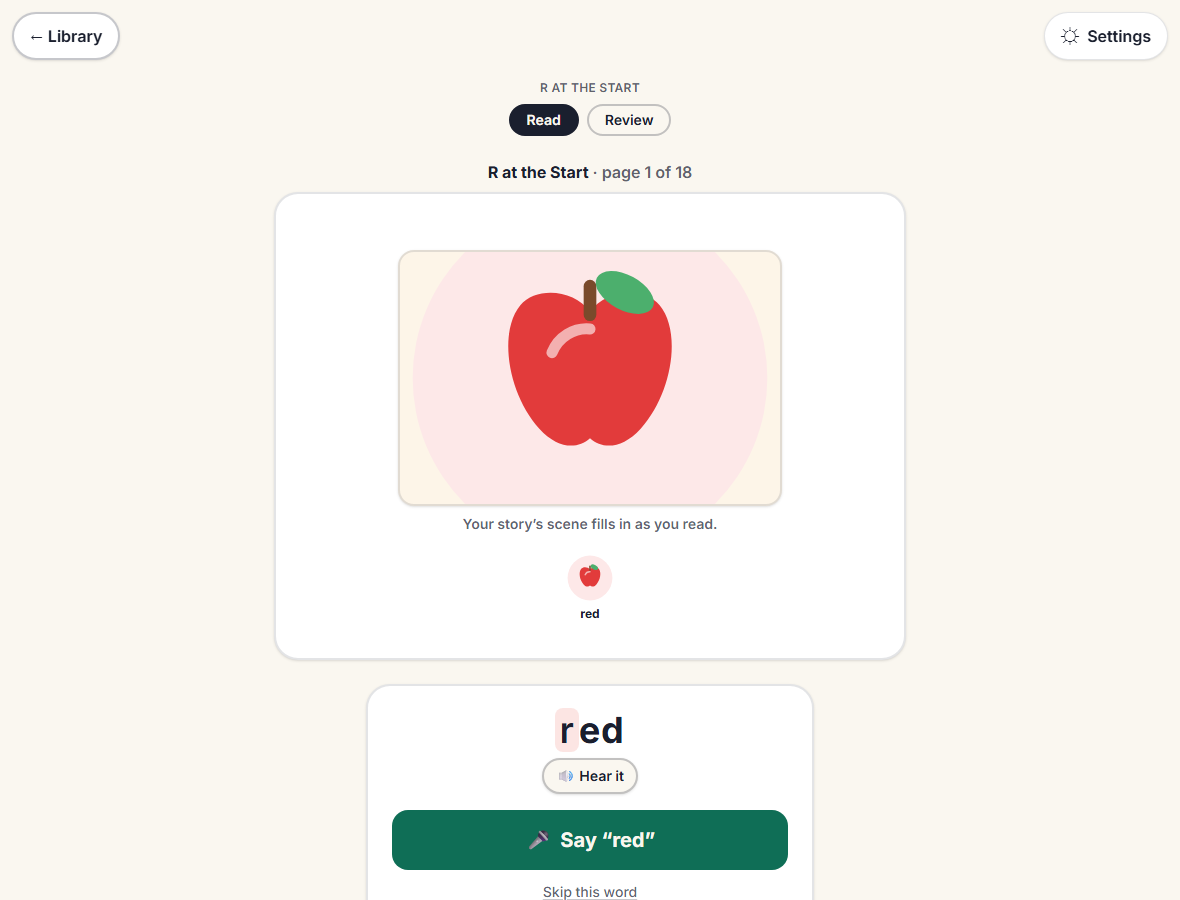
You open the book the clinician assigned and hand your child the device. They read a short story page, then practice its couple of target words: tap to hear a word, tap once to say it. It is simple enough that a young child can do the steps themselves.
-
Hear it first
Each word is shown large and clear, and your child can tap to hear it read aloud before they try.
-
Say it, build the picture
Tap once to record the word. Saying it brings its picture to life: the reward is for practicing, not for how the word came out.
-
No score, ever
Your child never sees a mark, a grade, or a cross on their speech. That keeps practice something they will come back to.
The reward is a picture, not a score
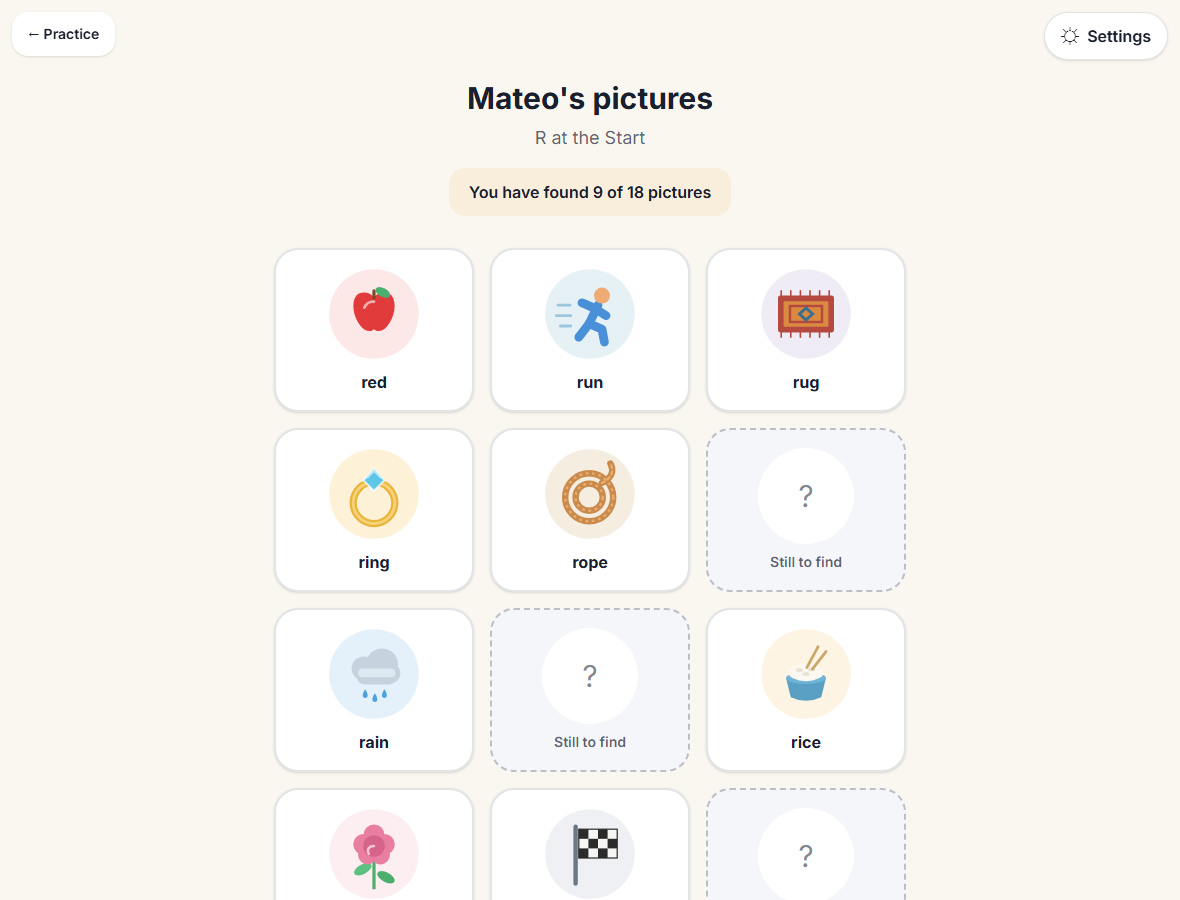
Every word your child practices adds a drawn picture to their collection. It is a gentle reason to come back: a growing set of pictures, tied to having practiced, never to how any word sounded. The only number your child sees is how many pictures they have found.
A story they chose, not a worksheet
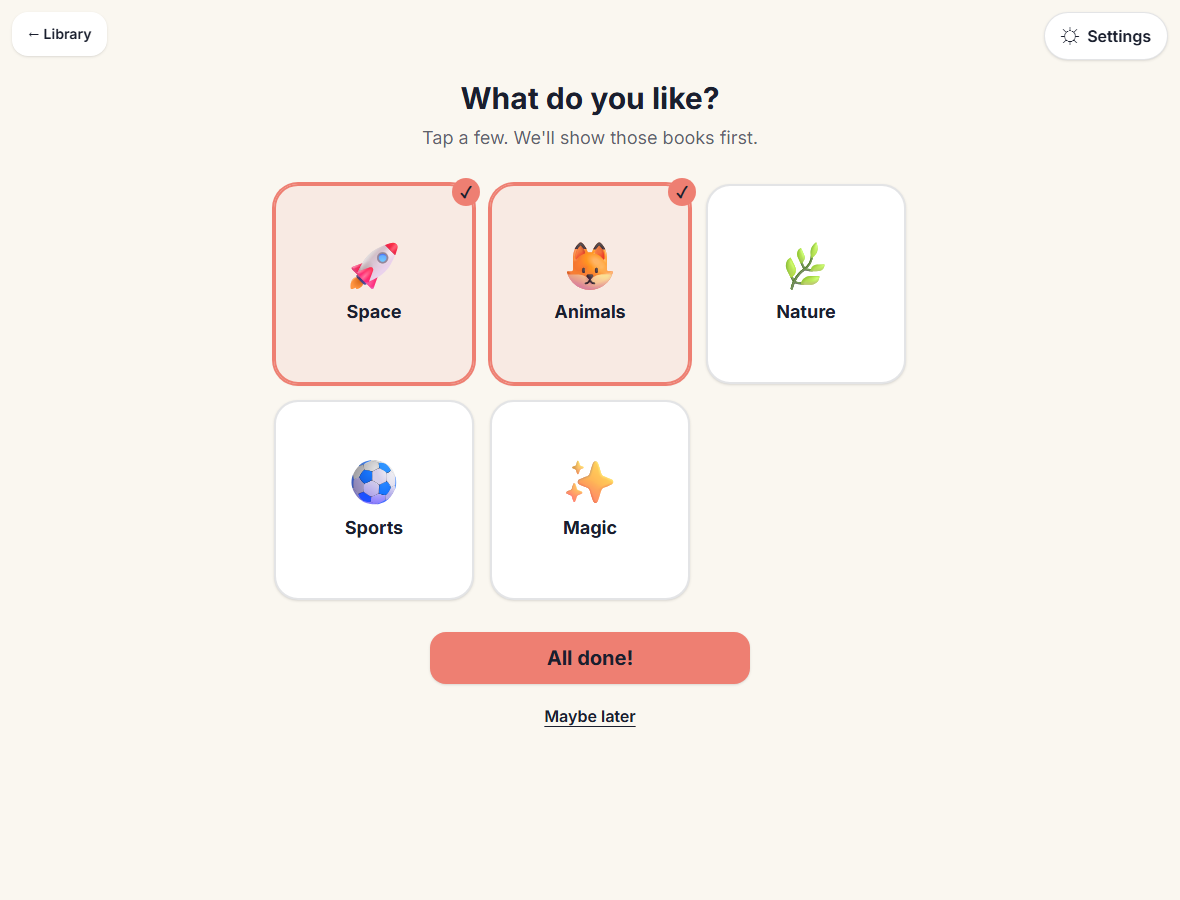
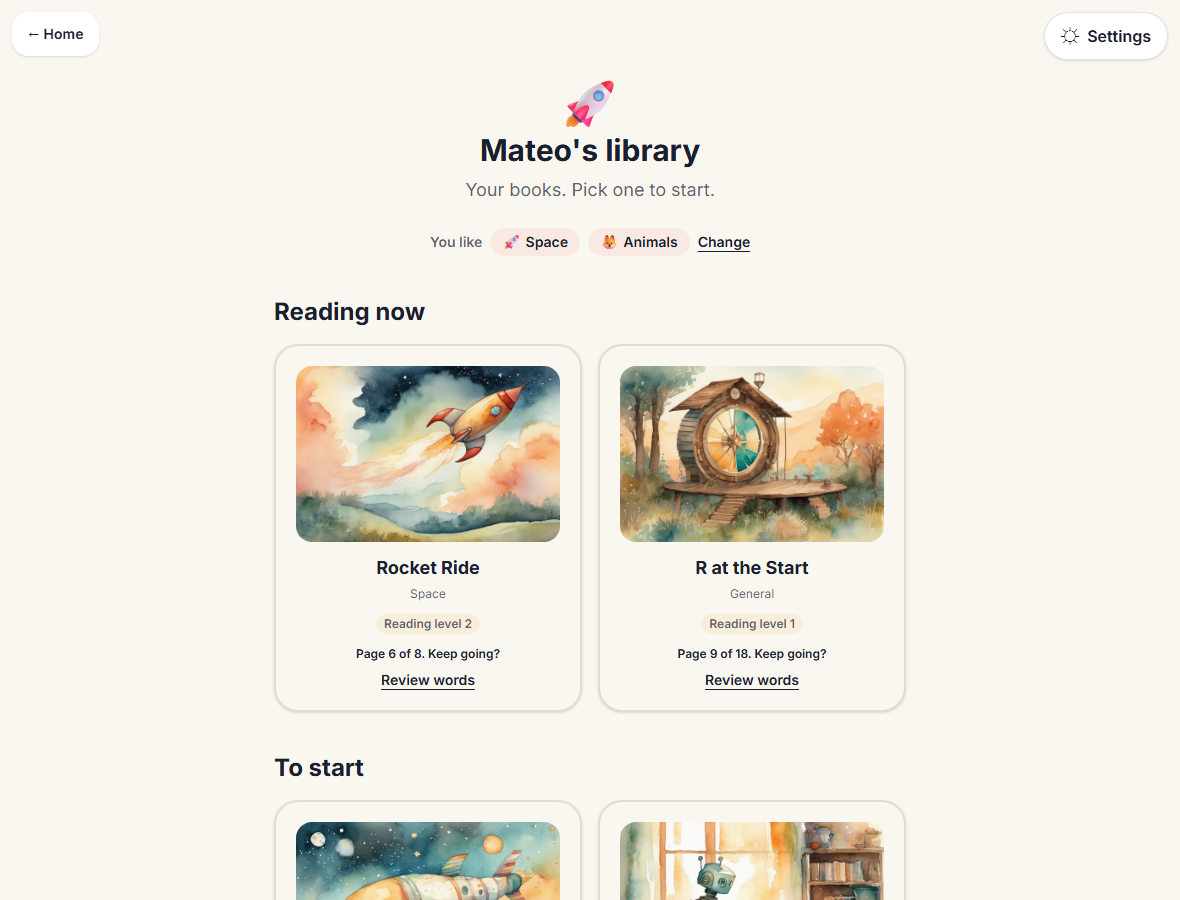
Once, your child taps the kinds of stories they like (space, animals, sports, whatever it is), and from then on their shelf leads with those. The clinician still chooses books that fit the practice; your child just gets a say in which one. A small choice at the start is often the difference between “again?” and sitting down to read.
Want to know when it's ready?
Articarry is in a small private beta. Leave your email and we'll tell you the moment families can join.
An honest word about screen time
Articarry is on a screen, and we are not going to pretend that does not matter. So it is built to be brief. A book is a short story on a handful of practice words: a few minutes, then done. There is no feed, no streak that punishes a missed day, nothing engineered to keep a child scrolling.
The picture collection gives a reason to come back; it is not a trap that makes leaving feel bad. When the words are done, the activity is done.
What you can see
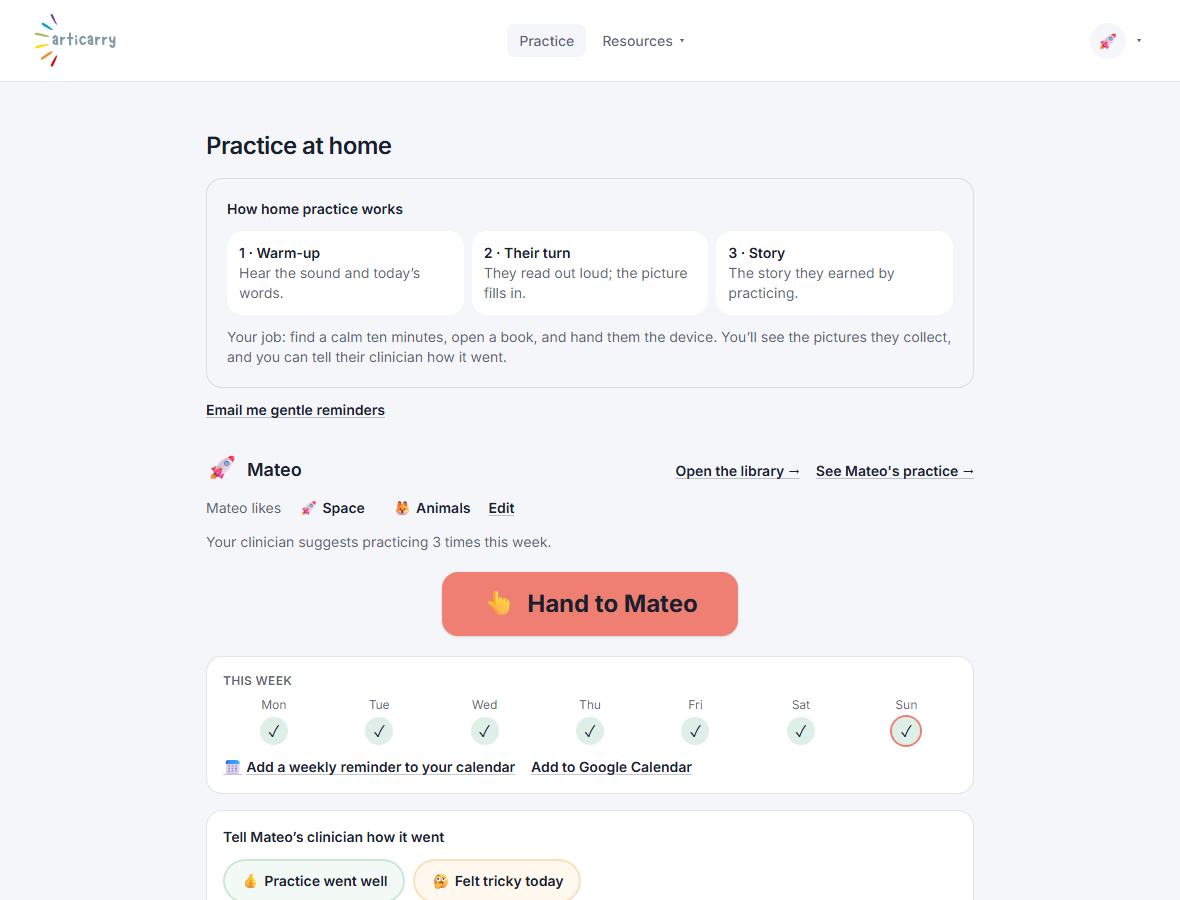
You have a calm home view: which books are assigned, how many pictures your child has found, and when they last practiced, plus, when you want it, a plain note on what to listen for. It is enough to know practice is happening, and it deliberately stops there. Listening to the recordings and deciding what they mean is the clinician's job, and Articarry keeps it that way so you do not have to.
Your consent comes first
Before any recording happens, you read a plain-language explanation of what Articarry does with your child's practice and decide for yourself. You can withdraw that consent at any time, and ask for the recordings to be deleted. No reason needed.
Questions before you start?
The FAQ answers the practical ones. Your child's clinician can answer the rest.
Your clinician sends a link to set up. That’s all you need. There’s no account to create here.
Want to know when it's ready?
Articarry is in a small private beta. Leave your email and we'll tell you the moment families can join.