For speech-language pathologists
You see them for an hour. The sound moves the other six days.
You run a caseload of home practice you have to take on faith, then plan the next session around a parent's hazy recollection. Articarry makes those six days visible, hands you the planning map and the record to act on them, and assembles (from your own records) the summary you used to write from memory. It never grades a child's speech. That judgment is yours, and the product is built so it stays there.
Scope & limits. Articarry shows what a child practiced and what you decided. It is not a test of a child's speech, and it makes no clinical claim.
Five things you do every week, and where each one lives now.
01 · the session-prep brief
“You assign home practice, and you never really see if it happened.”
Choose “Review” next to a child and it opens with what changed since you last saw them: how many days they practiced, every recording they made, and the words worth your ear first, queued up and ready to play.
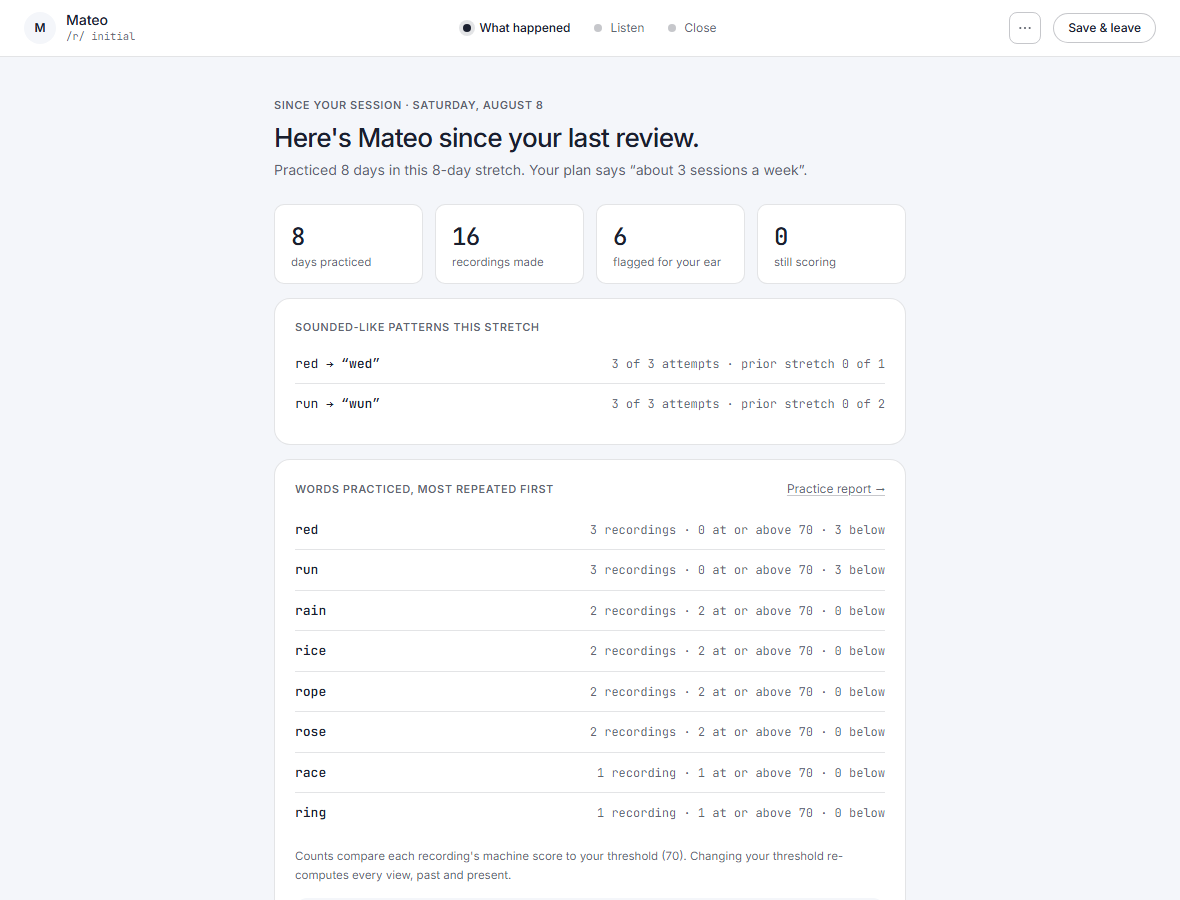
You walk in already knowing where to listen.
02 · Today
“At thirty-five kids, Sunday-night prep is triage from memory.”
Your whole caseload, pre-sorted before coffee: who needs your ear, who needs a nudge home, who needs a plan queued, and, just as usefully, who you can skip today. The page states its own denominator, so the skip is one you can trust.
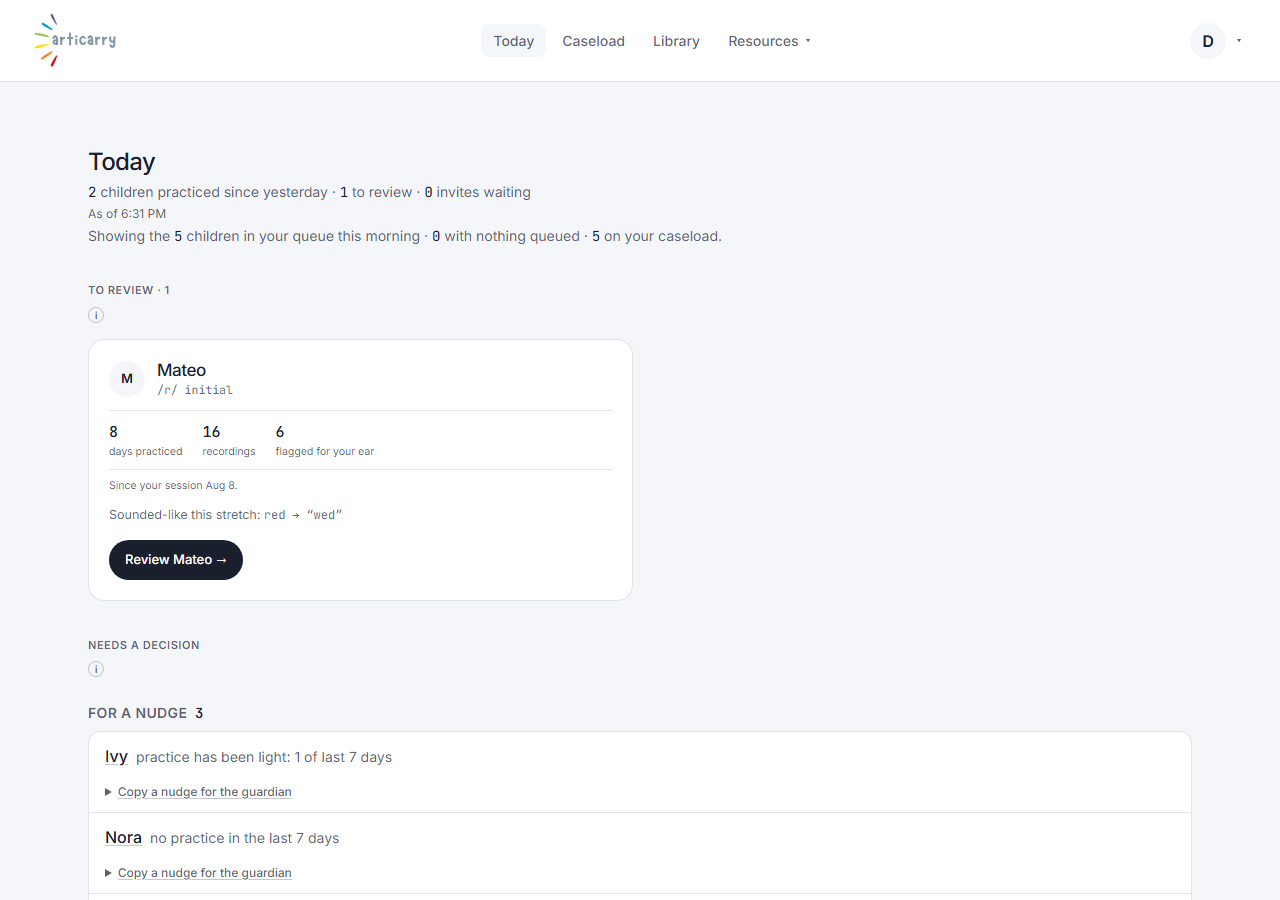
The morning's plan, made before you sat down.
03 · the planning map
“The hardest call is the quiet one: when do I move this sound up a level?”
Every sound by level, with what you set, what the recordings show, where the plan you chose meant to go next, and whether the library has books to support the move. The call stays yours; every fact you would want to make it sits on the cell. This is what articulation carryover tracking is, and what Articarry is not built for is stated just as plainly.
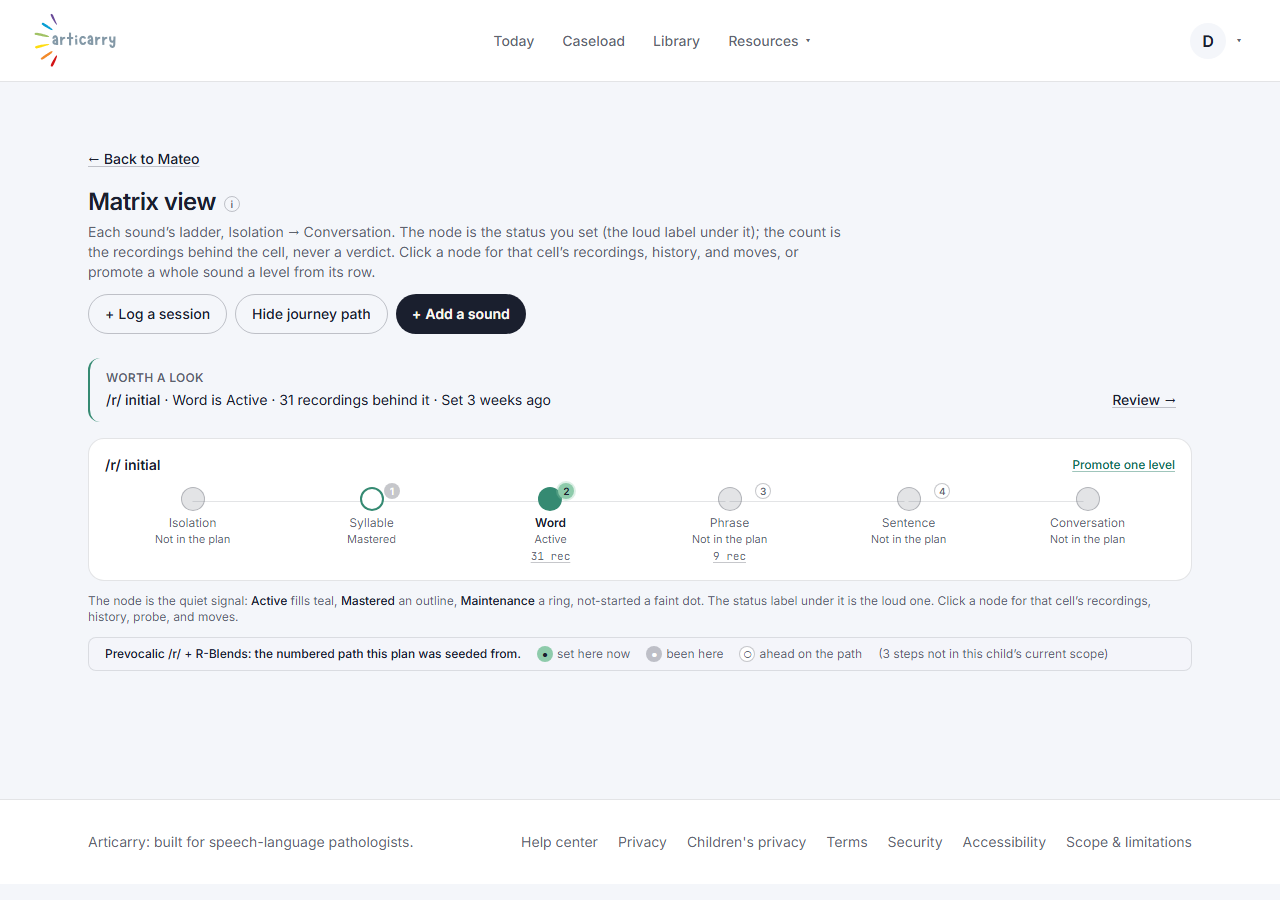
You re-plan from the evidence, not from a hunch.
See it before your patients do.
Articarry opens to clinicians in a private beta. Leave your email and we'll write when there's a real seat to offer. Not before.
04 · the progress letter
“Parents ask if it's working. Insurers want it in writing. You write it from memory.”
One page, built from your own records: the practice that happened, the plan decisions you made, the tallies you took by your own ear, and nothing the scoring engine produced. Print it, or save it as a PDF.
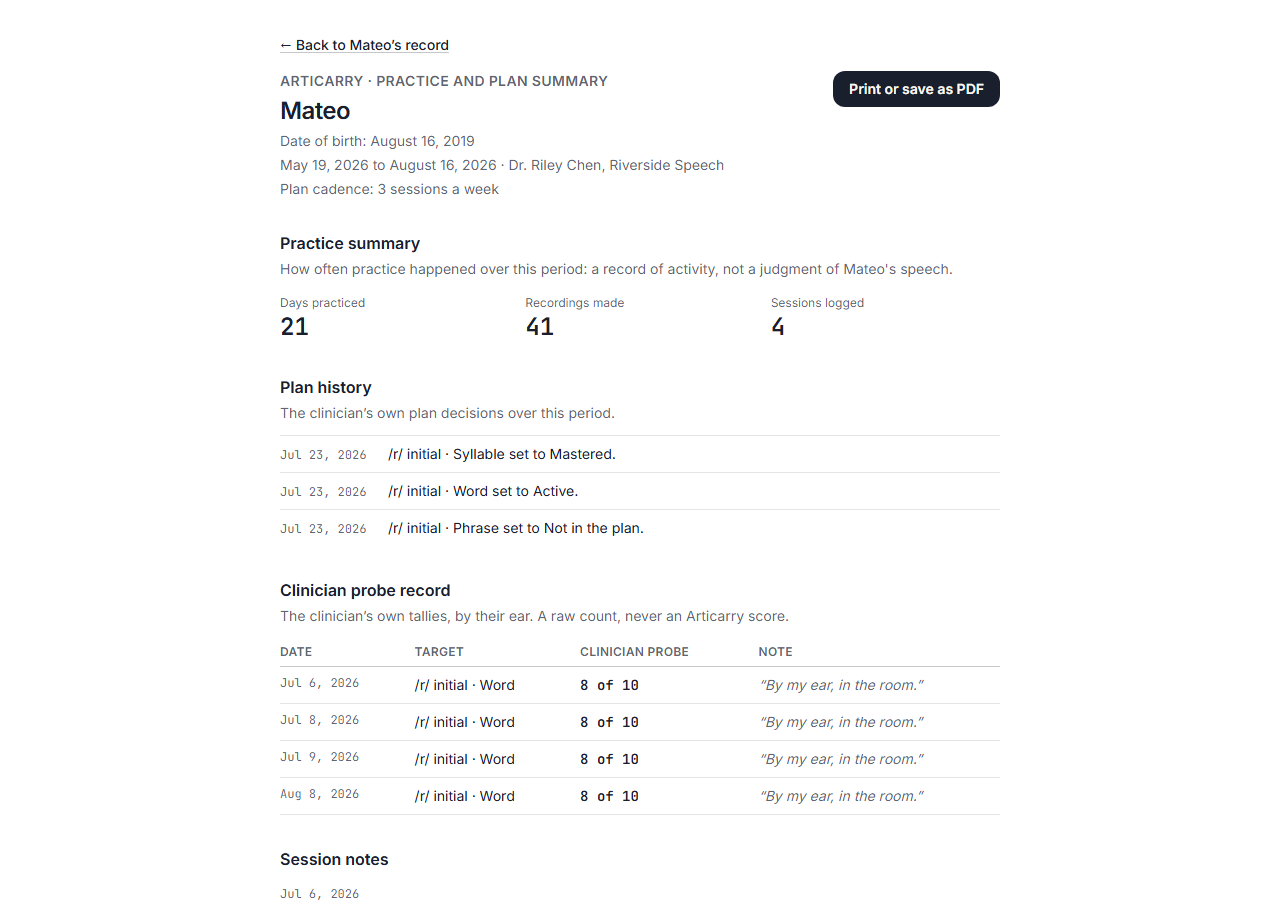
The document that used to take your evening, ready to hand over.
05 · the fit-shelf library
“Picking home material that actually fits the plan is guesswork.”
A “Fits” shelf reads the plan you set and shows its reasons: which active cell each book covers, how it matches the reading level you assigned. And the child gets a story they chose, not a worksheet.
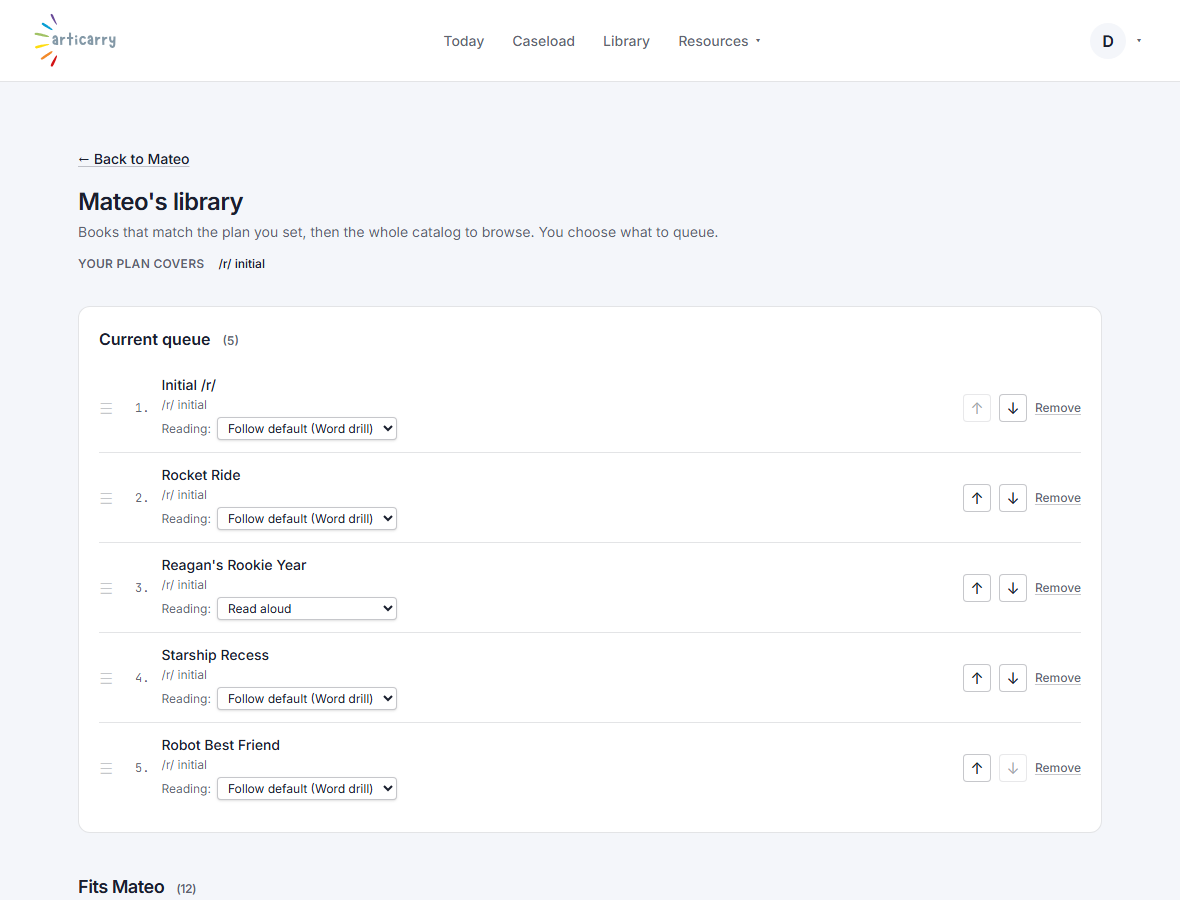
The book that fits is the obvious one, with the reasons in plain sight.
Why the restraint is the product
We keep your record. We never grade your patient.
Most software that touches a child's speech is built to score it and hand you a verdict. That is the easy thing to sell. It is also the thing a careful clinician can never quite trust, because the number came from an instrument no one validated on that child.
Articarry is built the other way around. It keeps the receipts: what was practiced, what you decided, what you tallied by your own ear. And it never puts a grade on a child's speech. That line is not a promise on a page; it is enforced in the build. Language that reads as a clinical finding fails the test suite and cannot ship.
If you have ever been handed a number about a child and not trusted where it came from, this is the tool built for that instinct.
See the design for yourself
The evidence page lays out what the design rests on and, just as plainly, what Articarry does not claim.
See it before your patients do.
Articarry opens to clinicians in a private beta. Leave your email and we'll write when there's a real seat to offer. Not before.